Why does Valorant feel so satisfying to watch when Phoenix players push every angle?
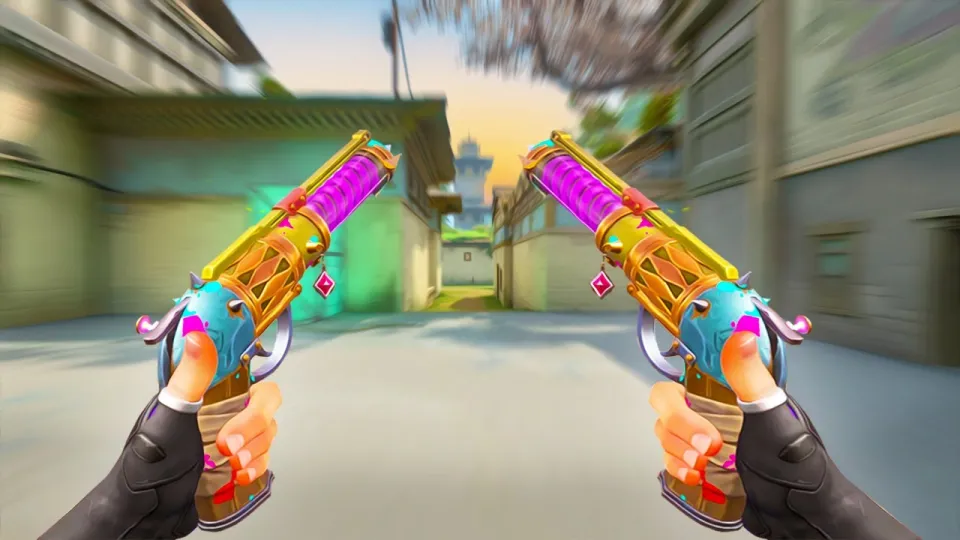
Video: 20 Minutes of Satisfying Valorant Clips
You can order the same kind of articles for your own video to boost it on YouTube and Google. Just message the Telegram bot @sat_sit_bot. It writes articles around your video, embeds the video and publishes them on popular niche websites (no ads). Your first 50 articles are free.
· based on the channel Rawzu
Valorant feels satisfying to watch when a Phoenix player turns every duel into a one-sided trade: flashes that blind through corners, a wall that splits a site in half, and a re-entry ultimate that lets him take the same fight twice. The Rawzu montage "20 Minutes of Satisfying Valorant Clips" is a clean example — 20 minutes of stretched-resolution Phoenix gameplay where the aim, the movement and the commentary do the work. If you want to see the same player live, he streams daily at kick.com/rawzu.
Why Phoenix is the agent behind most satisfying Valorant clips
Phoenix is an offensive duelist whose kit is designed to hunt enemies while crippling their ability to shoot back, and that design is exactly what makes his clips readable and satisfying. Blaze creates a wall that blocks vision and deals damage, so Phoenix can walk through contested open areas that would normally be suicide. Curveball throws a flash that blinds enemies even when they are hiding behind corners. Hot Hands gives him healing and area damage, and Run it Back lets him die, respawn at his marker and keep the round alive. Together they make Phoenix durable enough to play aggressively, which is why players who like taking first contact gravitate to him. In a montage format, that aggression produces a steady rhythm: entry, flash, kill, reset, repeat. A duelist who can heal himself, blind around geometry and undo his own death generates more highlight-shaped moments per round than almost any other agent in the role.
The settings behind the movement and aim in these clips
Rawzu's configuration explains a lot of what viewers describe as unreal movement speed and instant one-taps. His sensitivity is 400 DPI with 0.625 in-game, a low effective sensitivity that rewards big arm swipes and precise micro-adjustments. He plays on a 1440x1080 stretched resolution, which widens character models on screen and makes targets easier to track, and his crosshair is 1-6-2-2. The hardware list is just as specific: a Lamzu Maya X mouse, a Zowie H-SR-SE 2 Blue mousepad and a Zowie XL2566K 360Hz monitor. None of this is magic — stretched resolution, a low sens and a 360Hz panel mainly remove friction, so the player's decisions arrive on screen faster. If you copy one thing, copy the sensitivity and crosshair first, then adjust resolution once your aim feels stable.
What actually makes a Valorant clip satisfying
Satisfying Valorant clips are built on clean inputs, not lucky spray. Three elements show up again and again in this style of montage:
- One-taps on moving targets. A single Vandal headshot on an enemy who is strafing or peeking reads as skill because there is no room for correction.
- Utility used before the shot, not after. Flashing with Curveball or blocking sightlines with Blaze before entering means the kill looks inevitable rather than desperate.
- Movement that keeps the crosshair level. Counter-strafing, peeking wide and stopping to shoot is what makes the pace feel fast while the aim stays accurate.
- Sound and commentary. A reaction, a teammate callout or a joke lands harder than silence, and viewers in the comments consistently name the commentary as their favorite part of these clips.
That last point matters more than most players admit. Watching a Phoenix take a fight he should lose, survive it via Run it Back and then win the retake is only half the highlight — the other half is the human noise around it.
Reading the round economy and the plays viewers notice
Round economy is where a lot of the quiet skill in Phoenix gameplay lives. Viewers flagged a round where the player had a Vandal, full abilities and full shields on round two — a buy that only works if the first round went well or the team committed to a force. That kind of decision-making is invisible in a highlight reel unless you look for it, but it explains why some rounds look effortless: the player is fighting with a full kit while opponents are on pistols and half armor. On the other side, clips where a Sage gets caught mid-ability and a Clove is spotted under heaven show how quickly a round flips when utility is mistimed. Watching for these details turns a montage from background noise into a study guide.
Common questions and doubts from viewers
Viewers of this style of montage keep raising the same practical points, and they are worth answering directly.
- "What are your DPI and sensitivity?" Rawzu publishes them openly: 400 DPI and 0.625 in-game. Copy the number, then test it for a week before judging it.
- "Why do enemies in my games actually shoot back?" Highlight reels are edited from the best rounds of many sessions. Nobody wins every duel, and the clips that get cut are the ones where the read was right.
- "Does watching clips improve your aim?" Watching teaches positioning, crosshair placement and utility timing; it does not build the muscle memory. Use it as study, then practice in Deathmatch or range drills.
- "What is the appeal of stretched resolution?" A 1440x1080 stretch widens enemy models, which many players find easier to track. It is a preference, not a requirement, and it costs some field of view clarity.
Useful links
- Watch live daily streams: https://kick.com/rawzu
- Original music on Spotify: https://open.spotify.com/artist/6DbATPR1PTNMx7U918bg1Q
- Community Discord: https://discord.gg/axnFwyvxp3
The takeaway from twenty minutes of Phoenix gameplay
Satisfying Valorant clips are not a mystery: they are the visible result of a duelist kit used correctly, a sensitivity that suits the player, and rounds chosen from hundreds of attempts. Rawzu's Phoenix gameplay shows all three at once, and the montage format makes the pattern easy to study rather than just enjoy. Copy the settings, watch how Blaze and Curveball are used before the shot, and treat the commentary as part of the entertainment. If you want more of it, the daily stream at kick.com/rawzu is where the raw, unedited version of these rounds happens — the channel Rawzu is the author of this breakdown and the source of every clip referenced here.
Key takeaways
- Phoenix is a duelist built for aggression: Blaze wall blocks vision and deals damage, Curveball blinds even around corners.
- Rawzu runs 400 DPI with 0.625 in-game sensitivity, a 1440x1080 stretched resolution and crosshair code 1-6-2-2.
- His setup: Lamzu Maya X mouse, Zowie H-SR-SE 2 Blue mousepad, Zowie XL2566K 360Hz monitor.
- The montage "20 Minutes of Satisfying Valorant Clips" runs 20 minutes of Phoenix gameplay on maps like Lotus and Icebox.
- Viewers repeatedly point to the commentary, the movement speed and one-taps like the Clove kill as the most satisfying moments.
Questions & answers
What sensitivity and DPI does Rawzu use in these Valorant clips?
He plays at 400 DPI with 0.625 in-game sensitivity, which is a low effective sensitivity built for arm aiming and precise micro-adjustments. He also uses a 1440x1080 stretched resolution and the crosshair code 1-6-2-2. His peripherals are a Lamzu Maya X mouse, a Zowie H-SR-SE 2 Blue mousepad and a Zowie XL2566K 360Hz monitor.
Why do Phoenix players look so aggressive in Valorant highlight clips?
Phoenix is designed for aggression: Blaze blocks vision and deals damage, Curveball blinds enemies even behind corners, and Hot Hands plus Run it Back make him durable enough to take fights he should lose. That kit lets a duelist enter first, survive, and re-enter after dying. In a montage, those traits produce a constant stream of entry-and-kill moments.
Does watching Valorant clips actually improve your aim?
Watching helps with the parts of the game you can learn by observation: crosshair placement, when to use utility before peeking, and how to read round economy. It does not build the mechanical muscle memory that comes from practice. Use clips as study material, then train in Deathmatch or the range to turn those ideas into reactions.
What makes a Valorant clip satisfying rather than just lucky?
The satisfying ones usually combine a one-tap on a moving target, utility used before the shot instead of after, and movement that keeps the crosshair level while staying fast. Sound and commentary add a lot too, which is why viewers often single out a reaction or a teammate callout as the best part of a clip. Luck can produce a kill, but it rarely produces a clip worth rewatching.
Source: 20 Minutes of Satisfying Valorant Clips · Markdown version